A massive, double-trunked, white oak tree stands just beyond the side porch. The double oak’s wide spread branches and annual crop of acorns makes it an ideally suited home for an extended tribe of squirrels.

The acorn crop’s abundance varies from year to year. Several years ago, the crop was notably huge. Plump acorns literally covered the ground circling the double oak. The squirrels grew fat and fecund, and stories filled the media about Indigenous Peoples and the first European settlers eating the oak nuts.
As the double oak’s bounty coated the side porch, the blanket of marble-like acorns became a hazard and the thought of using them as food–acorn flour and maybe even baking acorn bread–gained traction.
I collected large, fresh acorns with intact shells. Producing acorn flour useable for baking requires considerable effort to remove the outer shell and inner paper-like testa, grind the acorn meats, and wash out any bitter tannins.
Keeping with rustic tradition, I chose a flatish stone with a dimple in it to steady the acorns while using a second stone to crack the shells. The freshly cleaned nut meats went into a bucket of cold water, step-one in the process of removing the tannins. The details of that process vary from expert to expert, but all have the same goal: Wash out the tannins. My collection of nut meats spent a day and a half in that bucket, with frequent changes of the cold water. Next, into the food processor for a thorough grind, which I dumped into a large sieve lined with cheesecloth for another wash. The cheesecloth catches and preserves the fats and starches that enhance to the finished flavor.
Squeezing the water out of the grind, I tasted the result: Really bland, but not tannic or bitter. One more fine grind and the flour was ready for drying. My kitchen’s electric oven has a “Keep Warm” setting that enabled me to use a relatively low 145-degree temperature for drying the grind. An afternoon and night in the warm oven resulted in acorn flour ready for baking.
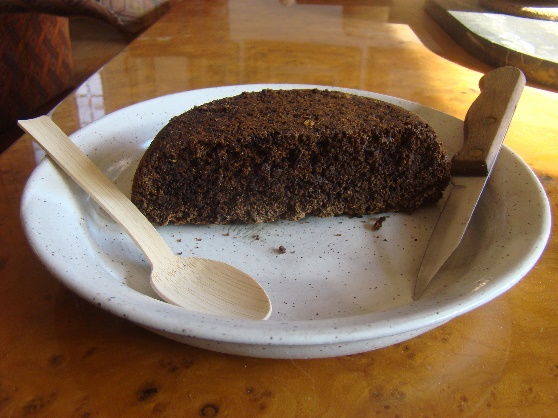
I used a standard yeast bread recipe for making a loaf of bread with the acorn flour. The dark, pumpernickel-like loaf was dense and chewy, but certainly edible, with a rich, nutty flavor. However, the amount of work involved to make a single loaf of bread–the cracking, peeling, multiple washings, and drying—convinced me to leave the rest of the acorns for the squirrels.
 Back to What We're Having
Leave a comment