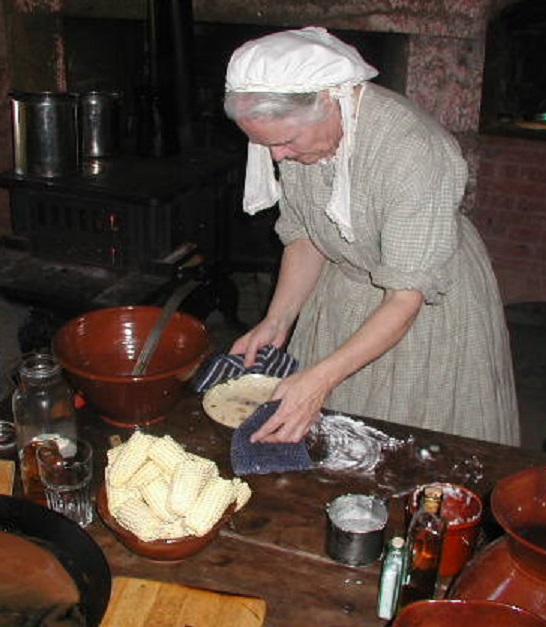
I was introduced to Priscilla Farlow Melson by one of her descendants, Lewis Melson. He sent a copy of “Recollections of Aunt Prissy,” four pages of recipes and remembrances of one of his ancestors living in Melson, a small Eastern Shore town, during the 1850s.
Prissy Melson lived from 1829 to 1919. In a few conversational paragraphs, she shared her experiences cooking in a time before stoves; in a time when meal preparation was an all day, all-consuming set of tasks, when technique still outweighed technology.
Making just about any dish usually began with growing, gathering, or killing most of the ingredients. Processing the foods–butchering, cleaning, cooking, preserving–added extra labor intensive steps to the recipe. Food was prepared and cooked on the hearth of the fireplace or outdoors in pits and bricked ovens.
Fruits and vegetables of all kinds were plentiful, both from kitchen gardens and at markets with neighboring farmers. Aunt Prissy talks of sun drying apples, pears, peaches, and huckleberries; her recipes call for corn, pumpkins, and potatoes.

Melson residents ate a variety of meats ranging from squirrel and rabbit to pork and beef. They ate chicken and, as Aunt Prissy tells us, “Turkey was food for special guests.” Seafood, such as oysters, was plentiful but had to travel from Salisbury or the Tidewater fishery.
While the menu was largely composed of locally produced foods, Europe and the rest of the known world sailed a course to Cambridge, St. Michaels, Oxford, and a dozen other Tidewater towns,. The local produce was one part of an often rich and cosmopolitan fare.
Aunt Prissy’s recipes open a window on America’s culinary history in a time when leavening for making dough rise was not always available. Instead, “beaten biscuits” became a Maryland tradition. Pummeling, pounding, and beating biscuit dough with an axe results in a characteristic consistency, and the air punched into the dough helps make it rise.
The Melson receipt for Maryland Worked Biscuits (beaten biscuits) calls for “3 1/2 pints sifted flour, mix in a teaspoonful salt and a tablespoon of sugar. (About, never measured it,-so test till right quantity is ascertained), 1/4 pound lard. Mix all well together. Use enough water to make a stiff dough (more danger of getting it too soft than too stiff). Work it a bit to get it to hold together well.
“Put dough on a biscuit board (placed on firm base) and beat with hatchet 1500 strokes (about 1/2 hour). Break up dough into pieces of proper size to pinch into form of small biscuit (about 1 1/2 inch diameter). Roll and pat in the hands. Place in pan with their pinched sides down. Mark on top in center with three ‘pricks’ of a three-tined fork.” Bake at 400 degrees until browned.
An easier, more contemporary recipe requires kneading with your hands rather than pummeling with an axe:
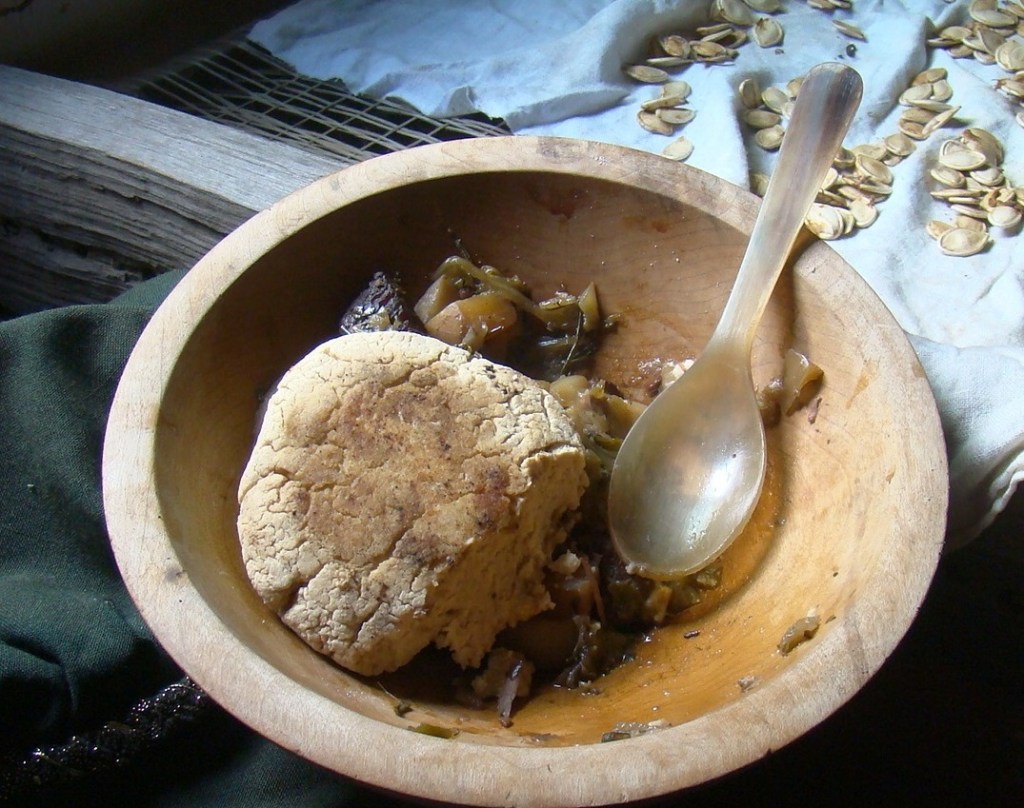
4 cups flour
1 tablespoon lard
1 teaspoon salt
1 to 2 cups water
Sift together the flour and salt. Work the lard in with your fingers
Slowly add the water to make a stiff dough; keep kneading for at least 30 minutes. Make small balls out of the dough and flatten on a board with a rolling pin. Prick each biscuit with the tongs of a fork. Bake at 400 degrees for 20 minutes and serve hot.
 Back to What We're Having
Leave a comment