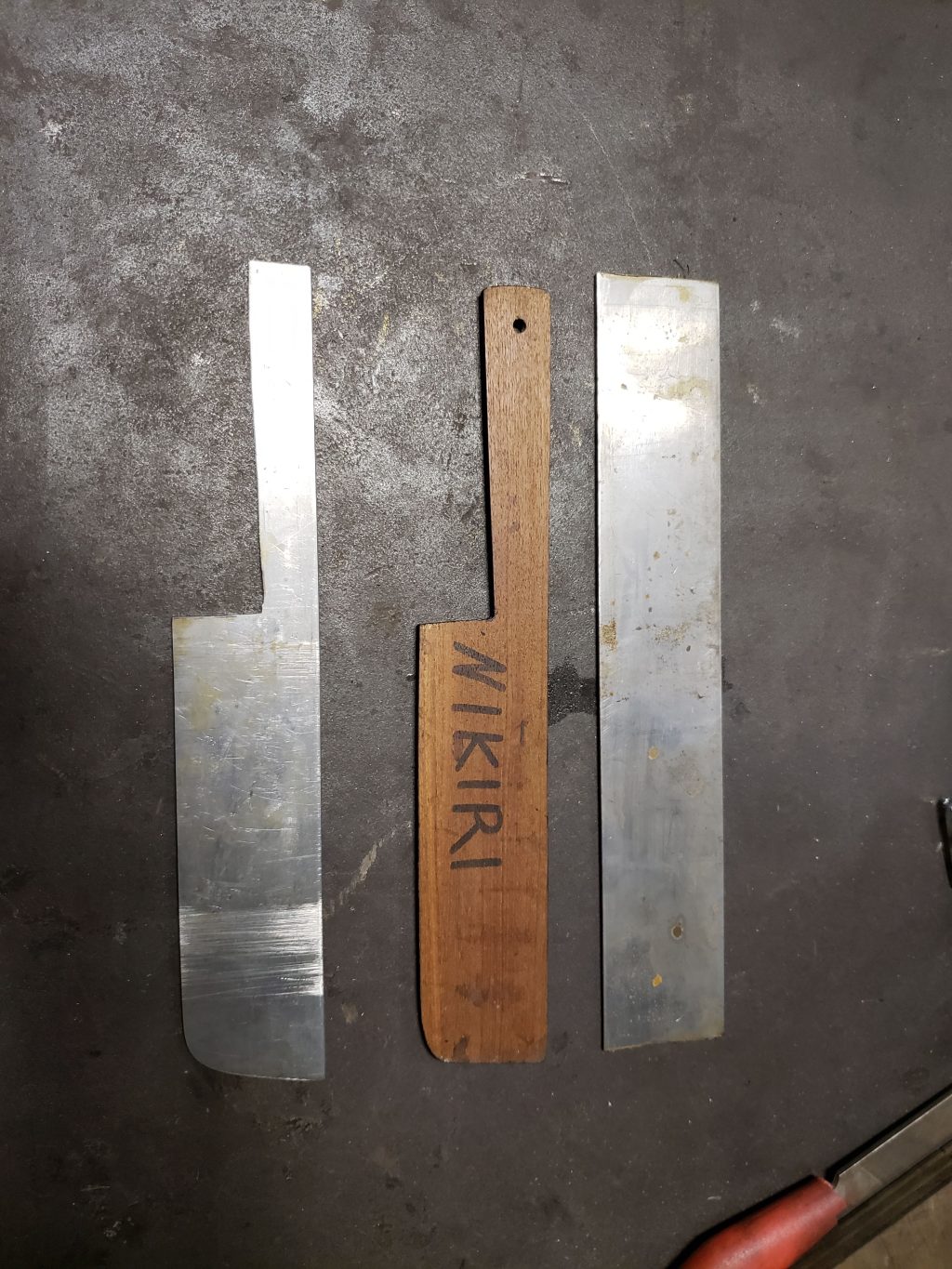
If you’re reading this, you are probably more than just the usual home cook. You experiment with ingredients and techniques. Recipes are guidelines, not strict instructions. You have way too much room in your kitchen dedicated to your spice collection. I know because I’m the same way. But a while back, I decided to take this a step farther. Sure, I make my own mayonnaise and ferment my own kraut, but what about my tools? The most important tool in the kitchen is a good knife, and I decided to make my own.
Knife making is a popular hobby; witness all the YouTube videos. There are crafts-persons making incredibly impressive knives using the classic forge and anvil, all the way up to plasma cutters and power hammers. They fold layers of steel together and pound them flat to produce knives that are absolute works of art. I didn’t want to go that far, and luckily, I didn’t have to. All I had to do was go to the Station North district of Baltimore City.

The Station North Tool Library (SNTL) is a nonprofit organization dedicated to helping people improve their lives through instruction and access to tools. Walking in, you can see just about everything needed for any project. Hammers and screwdrivers hang from the walls. Shelves overflow with electric sanders, drills, and routers. The main workshop holds all the big tools: table saws, jointers, and more.
As stated on their web site, the concept behind SNTL is simple: “The Station North Tool Library seeks to empower all people to improve their lives and environments, through affordable access to tools, skills, and workspace.”
Like that neighbor down the street who seems to have every tool ever made, SNTL can lend what you need. But it doesn’t stop there. SNTL will teach you how to use those tools with more than 30 classes ranging from making picture frames, to tiling a bathroom. My choice was making my own chef’s knife.
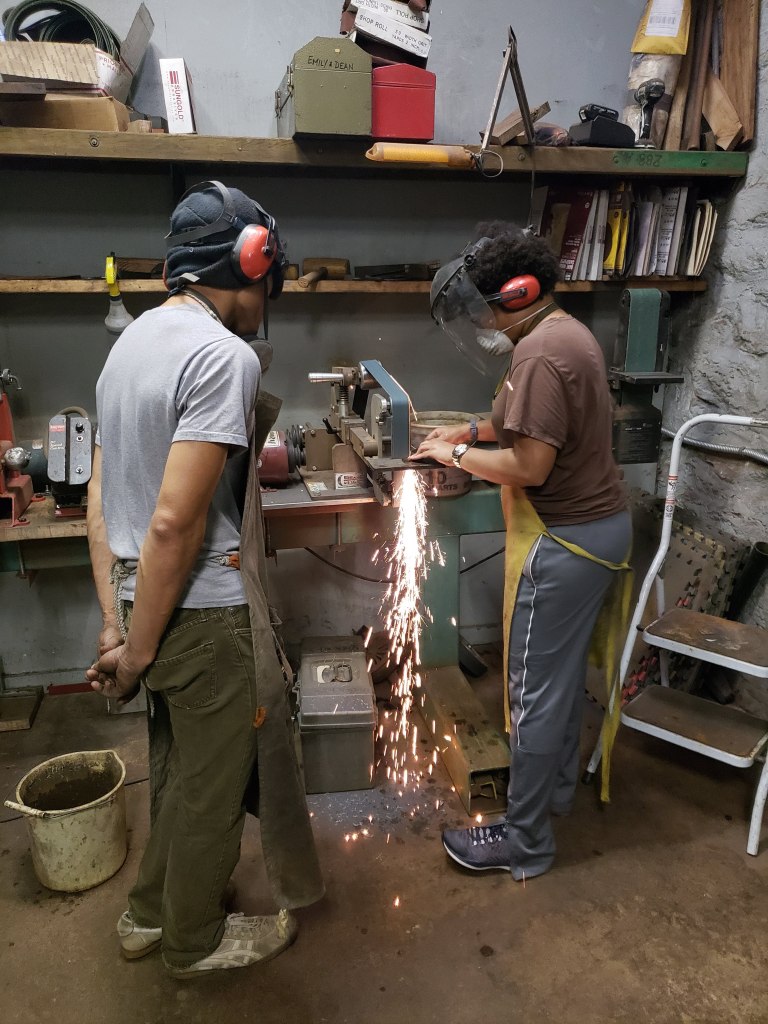
Creating a knife from scratch is loud and dirty and highly addictive. My instructor, Carlos, started making knives when a friend found the class and invited him along. As well as eventually teaching the class, he has made about a knife a month since he started. He’s lost count, but guesses it’s more than 25 by now. When asked what he does with them, he replied: “Most of the finished knives have ended up with family or friends. I’ve kept the ugly ones and the ones that don’t cut as well as I think they should.”
Making a knife starts with a bar of specially formulated high-carbon steel, a foot long, two inches wide, and a quarter inch thick. Using one of the dozens of templates, I drew the outline of the knife, and then the fun began. I chose a Japanese nakiri, not because it was fancy, but because it’s essentially a sharpened rectangle. I cut the rough outline with an angle grinder and refined it on a belt sander. Sparks were flying everywhere and, even though I had hearing protection, it’s really, really loud.
Next, using a belt grinder, I started creating the bevel (or geometry, for those in the know) that forms the blade of the knife. This is the longest, dirtiest, and loudest part of the process. Even with all that power, I needed hours of class time to get the geometry just right.
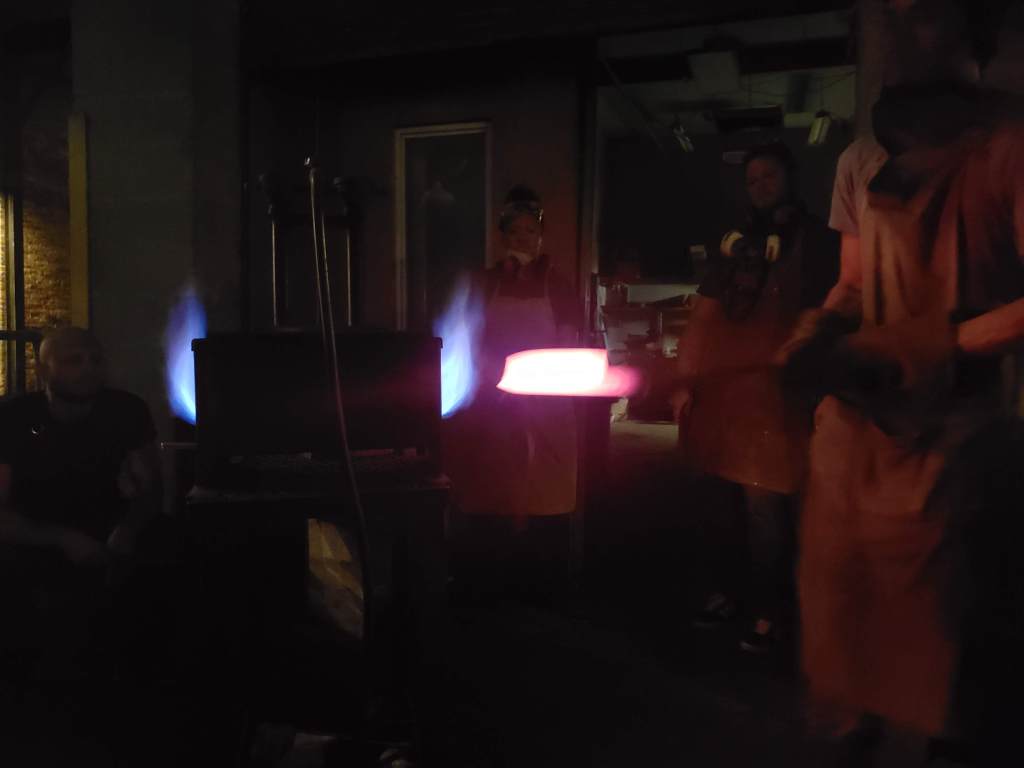
Then, I had to harden the steel. Using a propane furnace, I eased the knife back and forth until it glowed cherry red, then plunged it into a bath of oil. While it looked the same, the change in the crystalline strength of the metal was amazing.
I started to see my creation really come to life. I selected the wood for the handle from a box of cutoff scrapes. Oak, walnut, and mahogany, as well as more exotic woods, are available. My choice was tiger maple. I epoxied the wood to the handle and reinforced it with brass pins. Using finer and finer abrasives, the blade got sharper and shinier.
After sanding the handle to a shape that perfectly fit my hand, I had created a one-of-a-kind custom-made knife. I created my knife back in 2018 but, in spite of it being a first-timer’s, it is still my go-to knife for most everything. The blade is stained and the handle has lost its luster, but I wouldn’t have it any other way. Happy grinding!
Station North Tool Library
417 E. Oliver Street
Baltimore, MD 21202
410-347-0850
toollibrary.org

 Back to What We're Having
Leave a comment