Absolutely the Best
I tasted my first coastal-style barbecue more than 30 years ago, in a backroom eatery in Buxton on North Carolina’s Outer Banks. Off the tourist route, the tiny stand catered to island residents who favored the distinctive Eastern North Carolina style of preparing this most traditional meal.
It was unlike anything I had ever eaten. The meat was pork, not beef, ground beef, or chicken, and it didn’t hide under a sloppy sweet, catsup-based sauce. Instead, the mound of succulent, moist, shredded pork stood nearly naked on a soft bun. The only sauce in evidence was a cruet of vinegar with some anonymous spices and a rather evil looking pepper embalmed in it. A splash or two stoked the fire in the meat’s smoky tang and helped me understand why the creamy cole slaw was served unrequested.
At the time I didn’t realize what I had stumbled on. Only much later, after eating numerous lesser concoctions that tried to pass as barbecue, did I truly appreciated the magnificence I had experienced in that Outer Banks backroom. There, on a sagging card table perched on a torn linoleum floor, I had tasted an American original.
For most people, barbecue refers to an outdoor cooking contraption of some kind, usually fired with charcoal, wood, or, more recently, gas. Even the venerable Oxford English Dictionary defines barbecue as “a rude wooden framework used in America for…supporting above a fire meat that is to be smoked or dried.”
Spanish Caribbean Origins
The original word is Spanish and seems to have originated in Haiti, first appearing in print around 1697. Other folks believe that the word has a French etymology, derived from barbe `a queue, meaning “beard to tail.” This theory holds that a proper barbecue consists of an entire pig–from snout to tail. In coastal North Carolina, however, barbecue refers to the meat itself, not the thing the meat gets cooked on.
Barbecue historian Bob Garner traces three centuries of tradition in his exhaustive history North Carolina Barbecue: Flavored by Time (John F. Blair, 1996). Garner quickly points out the differences between the barbecue cooked in North Carolina and barbecue prepared elsewhere. He goes on to distinguish between the coastal and piedmont (or Lexington) styles of North Carolina cooking. Lexington style uses a thicker, sweeter “dip” as an accompaniment to the cooked pork. The more easterly, coastal style uses a simple vinegar and red pepper potion, both as a basting and to slosh on the finished product. But coastal or Lexington, true North Carolina barbecue cooks absolutely never drown the meat under a syrupy, glutinous sauce.
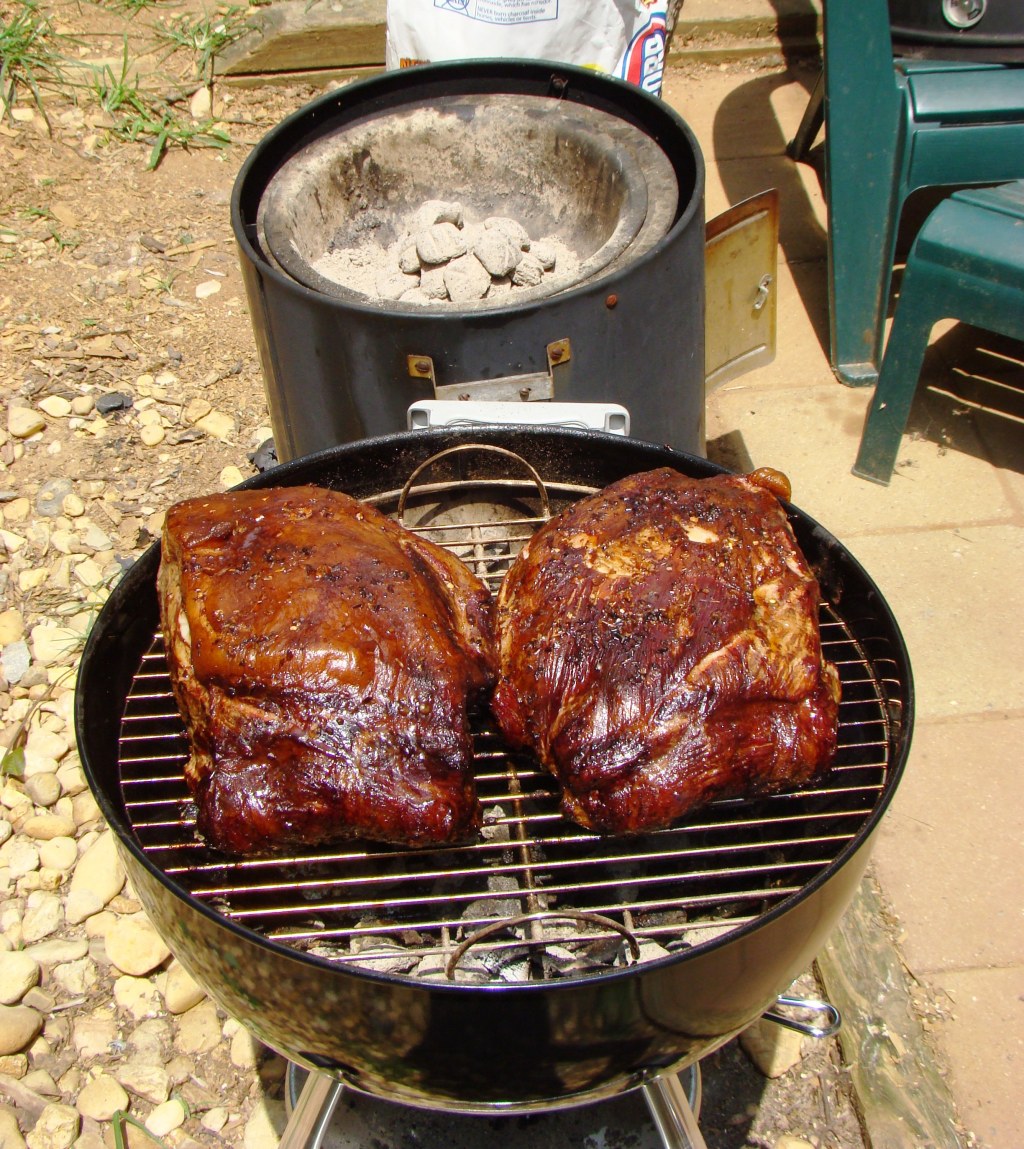
The meat is the focus of good North Carolina barbecue. Most usually (read that as “always, except for the most extreme circumstances”), the meat is pork–either a pork shoulder, a Boston Butt, or a whole pig–slow cooked on a rack over a heat source. Appropriately cooked barbecue can be pulled apart with a fork; the interior meat shows a creamy white or slightly tan color and bursts with aromatic juices. The flavor is smoky and strong but pleasant and almost sweet.
A Tar Heel Religion
Barbecue approaches a religion in some Tar Heel circles. This is not surprising given the long history of church-sponsored “pig-pickings,” pork-powered political functions, and massive municipal barbecue festivals throughout the eastern half of North Carolina.
Certain restaurants, usually family-operated, wood burning, and generations old, have achieved mythic status: the Skylight Inn in Ayden, Stamey’s in Greensboro, Scott’s Famous in Goldsboro, Parker’s in Wilson. Partisans vocally extol their favorites: But, to eat truly superb barbecue, cook it yourself at home, and serve it hot and fresh from the grill. A well-prepared barbecue is the product of planning, considerable attention to detail, and hours of slow cooking. As Bob Garner says: “Barbecue is like a coquettish young woman, favoring only those suitors who ply her with considerable time and attention.”
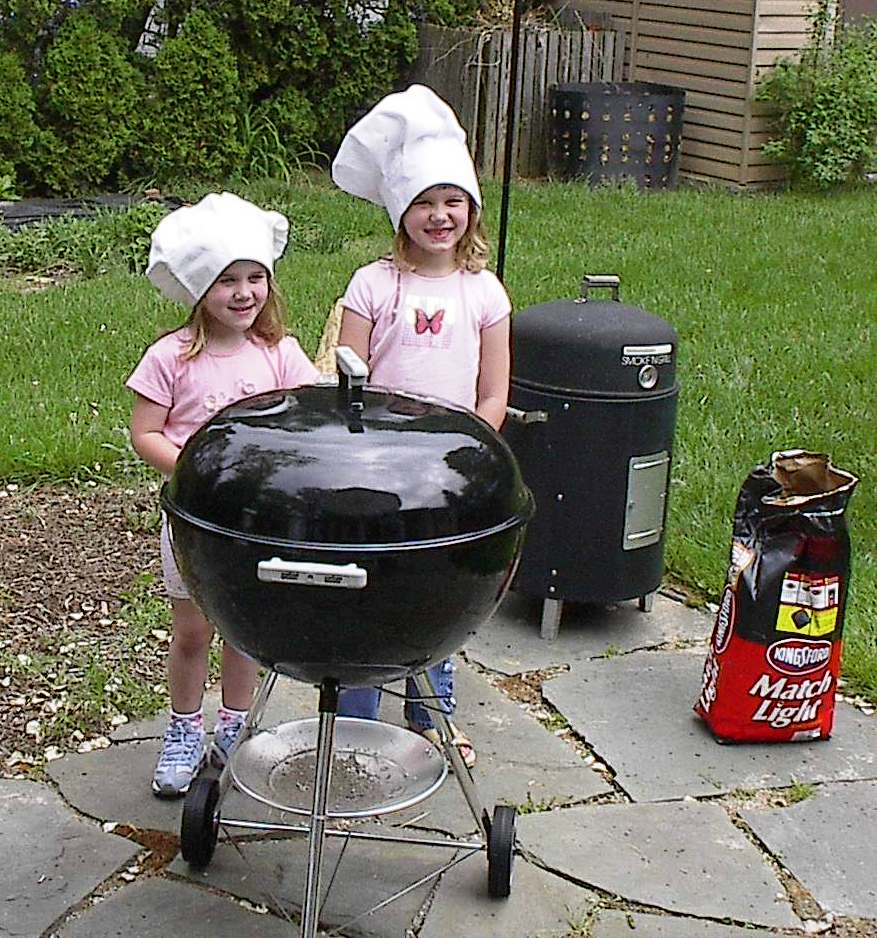
Begin your barbecue by gathering your crew. One barbecue axiom is: Never try it alone. Cooking takes as much as nine hours and is best done in a very social atmosphere, with several people alternating tending the fire, working on the sauces and side dishes, and chilling down the liquid refreshments. (Barbecues are notoriously hot, sweaty affairs and make excellent venues for quaffing copious quantities of iced tea, beer, and perhaps even stronger beverages.)
The Whole Hog Option
Purchase the best meat possible, usually directly from a butcher rather than from a supermarket. Going “whole hog” is a romantic notion but demands a greater level of skill and equipment than using a pork shoulder picnic or Boston Butt. For a family or neighborly cookout, a 6 to 7 pound shoulder or a 12 to 15 pound butt (the two halves cut from the whole shoulder) proves the best choice. Generally, about half the weight cooks off or is lost in the bone.
Choose your cooking apparatus with the same care that you use for the meat. A kettle-type outdoor grill with a removable cover works fine. Some people prefer the ease of a gas grill, but nothing, absolutely nothing, can match the taste of cooking on real hardwood. If you don’t have a quantity of well-seasoned oak or hickory on hand, use good quality hardwood charcoal. About 10 pounds will cook a shoulder. You also need a bag of hickory wood chunks (not chips) for flavoring, a second grill or other fireproof container to pre-fire additional coals, a small shovel or metal scoop for transferring the burning coals, and a reliable meat thermometer. Elbow-length hot mitts or heatproof leather gloves also prove indispensable.
Thickly salt the meat side of the shoulder and let it sit as you prepare the fire. To serve dinner at 6:00 PM, fire up the grill at 9:00 AM. (Yes, this is an all day affair.) Ignite about five pounds of coals in the bottom of your grill and let them burn until covered with a layer of gray ash. Using the shovel or scoop, leave six or seven briquettes in a single layer in the center of the grill and separate the remaining coals into two even piles at opposite sides of the grill. Top each pile with a single dry hickory chunk. As soon as the hickory chunks begin to smoke, put the cooking grate on your grill and lay the shoulder, meat side down so that the fat drips down through the meat, keeping it moist as it cooks. Cover the grill leaving the ventilation holes open.
After covering the grill, ignite a fresh pile of coals in the second grill. You will use these pre-fired coals to replenish the cooking fire.

Slow Cooking
Slow cook the, browning the outside to a rich, dark crispness without any charring or burning. Keep the bulk of the coals away from directly beneath the meat, but the key is maintaining the fire at the correct temperature. If you can see a few wisps of smoke escaping the covered grill, but can still place your hand on the cover for a second or two, you are in the right neighborhood.
After 30 to 45 minutes, replenish the cooking fire to maintain the proper temperature. Uncover the cooking shoulder and, using your shovel, move a half dozen burning coals from the second grill onto each of the two piles in the main grill. Do not add anymore coals beneath the meat. Top each pile with a new hickory chunk and recover the grill and baste the pork with Basic Eastern North Carolina Barbecue Sauce (I present the recipe at the end of this article). Add fresh coals to the second grill, open a cold beverage, and get comfortable. Follow this same routine, every 30 to 45 minutes, about a dozen more times before dinner.
Now is the time to consider the cole slaw. Opinions differ on the full range of barbecue accompaniments. Hush puppies, potatoes, yams, corn bread, and Brunswick stew all have their champions, but everybody (read that as “everybody”) agrees on slaw. The cooling, crunchy slaw and tangy, boisterous barbecue, underscored by the bun, are natural harmonics blending into a musical chord with each bite.
Though everybody agrees on cole slaw, hardly anybody agrees on the recipe except that it should have cabbage. The formulae divide into two general classes: those with mayonnaise and those without. The mayonnaise slaws are more favored in the coastal areas and often contain mustard, sweet pickles, sweet relish, and some apple cider vinegar. Piedmont cole slaws eschew the mayo and, instead, use more vinegar. Upland chefs might also add catsup and hot sauce. Both varieties are sweetened with sugar and served either as a side dish or directly atop the barbecue.
Rotating the Barbecue
As you mix your slaw and decide on the other side dishes, keep an eye on the clock. Around 3:00 PM, turn the shoulder, rotating the fat side down onto the grill. The meat side, turned upwards, should have a crisp, brown crust. Continue cooking, basting, and replenishing the fire until the meat’s interior temperature, away from the bone, reaches 170 to 180 degrees.
Remove the shoulder from the grill and place it on a chopping board. You should be able to pull the meat apart using just a pair of forks. You can set aside large chunks or slices of the pork or chop and shred it into the popular consistency. Remove any fat prior to chopping, but keep in the crisp outer crust (if you can resist snitching it as a reward to the chef). Serve the pork on fresh potato rolls with a strong dash of Basic Eastern North Carolina Barbecue Sauce, a dollop of a sweet mayonnaise slaw, and plenty of sweet iced tea.
After decades of barbecue, I still favor the Spartan simplicity of the sauce brewed by that long lamented Outer Banks chef. And, the best barbecue I’ve ever eaten? My own, of course. But that’s just my opinion.
Basic Eastern North Carolina Sauce Adapted from North Carolina Pork Producers Association
2 quarts apple-cider vinegar
1½ to 2 ounces crushed red pepper
2 to 4 whole cayenne, chili, or Tabasco peppers
2 tablespoons salt, or to taste
1 tablespoon lemon pepper, or to taste
Mix all ingredients well. Use as a basting and to season chopped barbecue to taste. Store in a tightly sealed container either with or without refrigeration.
Lexington-Style Dip From Bob Garner’s North Carolina Barbecue: Flavored by Time (John F. Blair, 1996)
3 cups apple-cider vinegar
2/3 cup brown sugar
1/2 cup catsup
2 tablespoons hot sauce (Texas Pete or equal)
Salt to taste
Black pepper to taste
Dash of Worcestershire sauce
1 ounce finely chopped onion
2 ounces browning sauce (Kitchen Bouquet or equal)
Combine all ingredients in a large pot and bring to a simmer over a medium heat, stirring until the sugar melts. Let sit for several hours before serving over chopped barbecue or sliced pork. Store in a tightly sealed container either with or without refrigeration.
WhatWereHaving’s Eastern North Carolina Coleslaw
1 medium sized head of cabbage, chopped into shreds
1 small sweet onion, diced
1 green pepper, thin sliced
6 ounces sweet pickle cubes or relish
1 cup mayonnaise
¼ cup yellow mustard
2 ounces apple cider vinegar
½ cup sugar
1 ounce celery seed
1 teaspoon salt
½ teaspoon lemon pepper
Mix all ingredients in a large plastic food storage bag. Chill for one hour then serve. One medium sized head of cabbage makes enough slaw for 20 servings.
WhatWereHaving’s Piedmont Coleslaw
1 medium sized head of cabbage, diced
1 small sweet onion, diced
1 green pepper, thin sliced
4 ounces apple cider vinegar
1-cup catsup or ½ cup catsup and ½ cup Kraft barbecue sauce
½ cup brown sugar
1 teaspoon salt
2 teaspoons lemon pepper
2 teaspoons hot sauce
Mix all ingredients in a large plastic food storage bag. Chill for one hour then serve. One medium sized head of cabbage makes enough slaw for 20 servings.

 Back to What We're Having
Leave a comment