Paella is one of the first foods that come to mind when you think of Spain. A large flat pan bubbling with all sorts of meats and vegetables and, of course, rice. A recent visit to Valencia, Spain, on the Mediterranean coast, included a class on making this tradition-steeped dish.

One of the first things to learn is where you make paella can determine what you put into it. However, if you want traditional, Valencia considers itself to be the dish’s home. Even though Valencia is on the Mediterranean, traditional paella does not allow putting in seafood. My instructor, Rafe, the “Professor of Paella”, stressed that traditional paella is a very simple dish that does not take advantage of Valencia’s abundant seafood. Rice was something farmers whipped up for lunch while tending the crops.
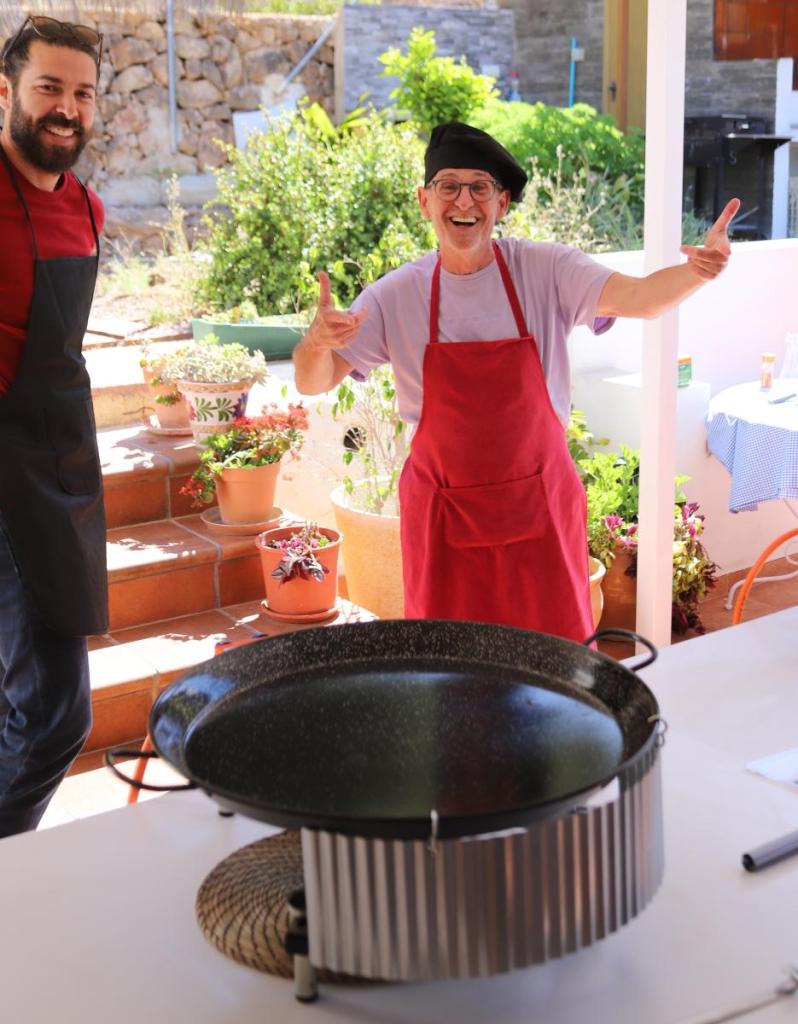
Rafe started with a good amount of local olive oil in the paellera, a large flat pan for cooking the dish. Paella was originally cooked over a campfire, but Rafe used a double-ringed gas burner to heat the whole surface of the thin metal pan. With only the inner burner lit to start, he added some chicken and rabbit pieces to brown. The dish was originally cooked by the farmers working Valencia’s abundant rice fields. They used whatever meat was on hand, so duck and snails are also acceptable.
Following a Traditional Recipe
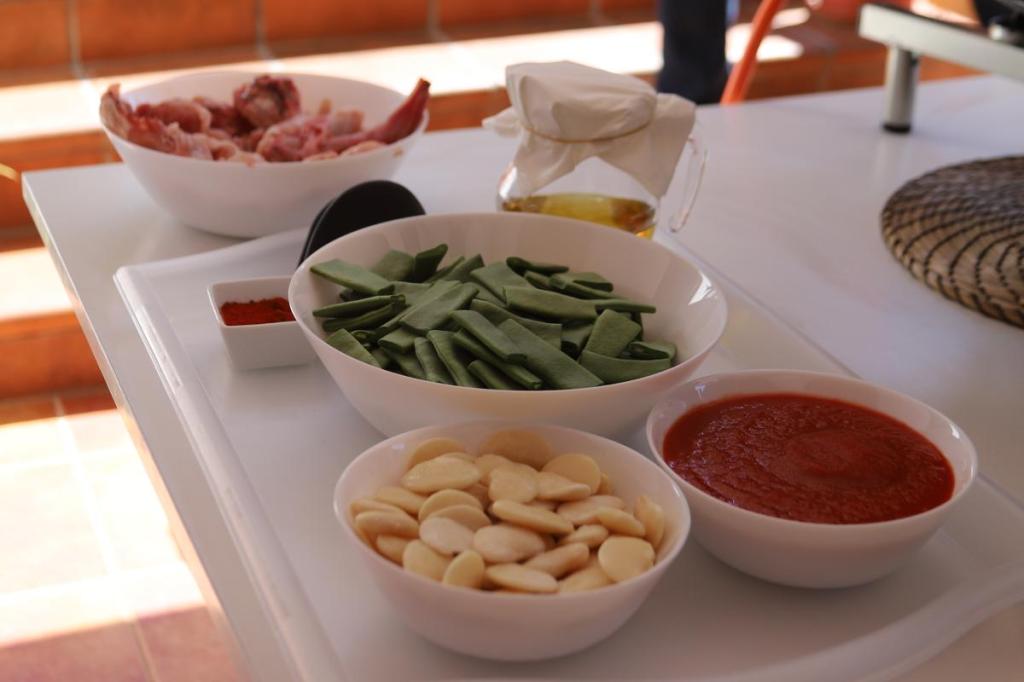
As the meat thoroughly browned and smelled amazing, in came the vegetables. Surprisingly, no onions or garlic, the aromatics that form the base of so many dishes in Spain and around the world. Onions and garlic, often called the king and queen of the Spanish kitchen, were absent here. What Valencia did have was plenty of beans. Ours included a handful of large butter beans and wide, flat, string beans. Rafe moved the meat to the cooler outer edge of the pan and stirred the beans around until they also took on some color.
After the beans cooked through and were moved to join the meat, then came the primary seasoning: Good Spanish paprika and plenty of it. Rafe stressed that the two generous tablespoons were to be toasted in the oil for three seconds and three seconds only. Even though Rafe spoke no English, his animated gestures along with translations by his assistants Arturo and Javier, clearly got his points across. The paprika cooked in the center while he counted down three seconds, followed by a cup or two of tomato sauce and a few liters of water. The pan would simmer for about 30 minutes.
While it was cooking, our guide, Carmen, gave us a history lesson as we enjoyed local wine, cheese, olives, and assorted meats. Carmen explained that when you invite someone over for paella, they are like family the moment they step through the door. “Mi casa es su casa” is in full effect. My home is your home. This was clearly felt everyone in the class.
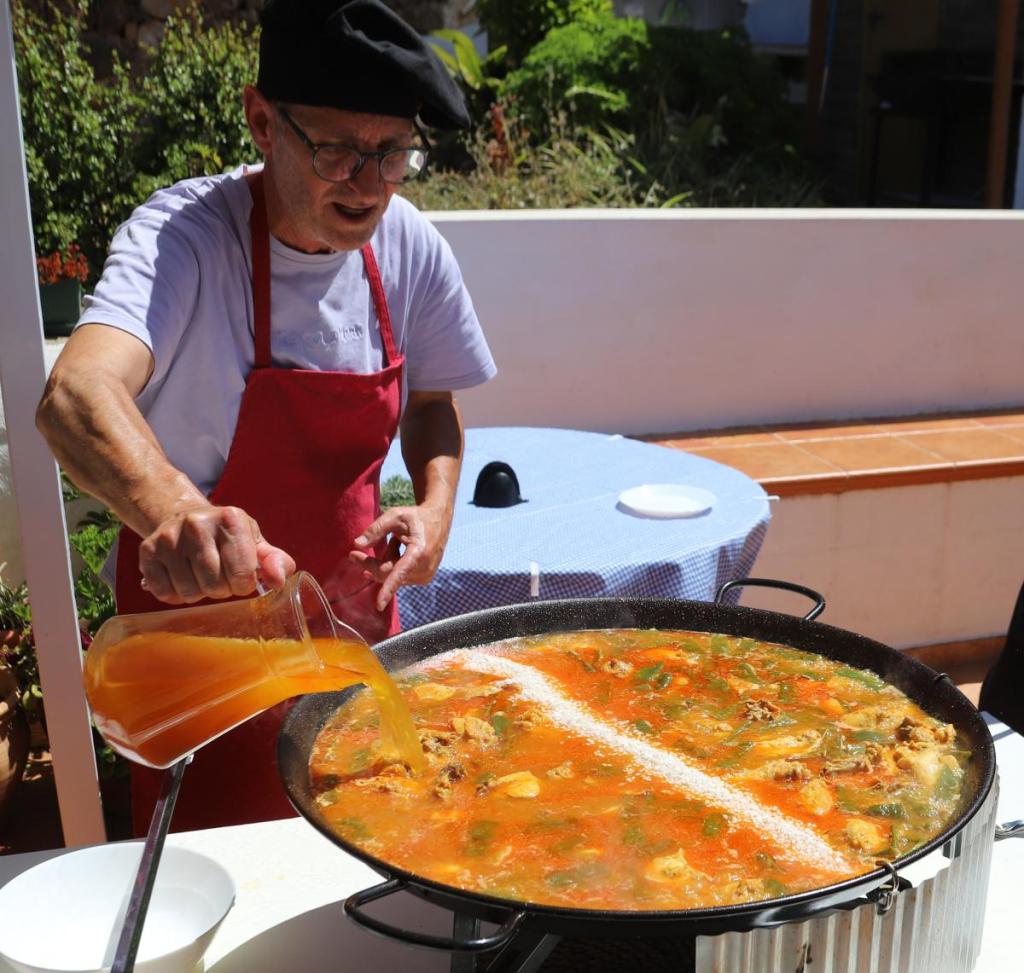
Next came the backbone of this hearty dish: Rice. Valencia has been growing rice since the Moors introduced it in the 8th century. The region’s short round rice is considered one of the finest in the world. Rafe added his rice to the pan by pouring it in a line from one side to the other. He explained that this was how he determined the correct amount of water needed for the rice. Afterward, he distributed the rice around the pan, and then it was hands off. The rice needed to cook for exactly 17 minutes. (See, Rafe. I did remember.) After adding a little salt, lunch was ready.
Paella is a community dish. The pan was set in the middle of the table and everyone used a spoon to eat from their section. This is where the politics of paella came into play. You ate from the section in front of you. Borders must be respected but as Carmen said, there can be treaties and negotiations with our neighboring eaters. Carmen did go around trying all little from all of the pans so we christened her our ambassador-at-large. If you’re lucky, the rice that was on the bottom of the pan got crispy and caramelized. This is known at the socarrat and no diplomacy was getting me to share mine. At Rafe’s direction, everyone said, “Wow, wow, wow. The paella is delicious.” None of us needed any more prompting than that to agree.
Rafe explained that variations of this dish have migrated all around Spain over the centuries. There’s black paella made with colored squid ink that has a briny flavor. Chorizo paella uses the spicy Spanish sausage. Even mixed paella that has a little bit of everything. In Rafe’s eyes, those are OK, but he considers them “rice and things” and I can see why. The simplicity of this dish is its hallmark. Basic ingredients cooked simply using what’s on hand. While this started out as a simple farmer’s lunch, Rafe and his team elevated it to something wonderful.

 Back to What We're Having
Leave a comment